
Last updated November 15, 2026
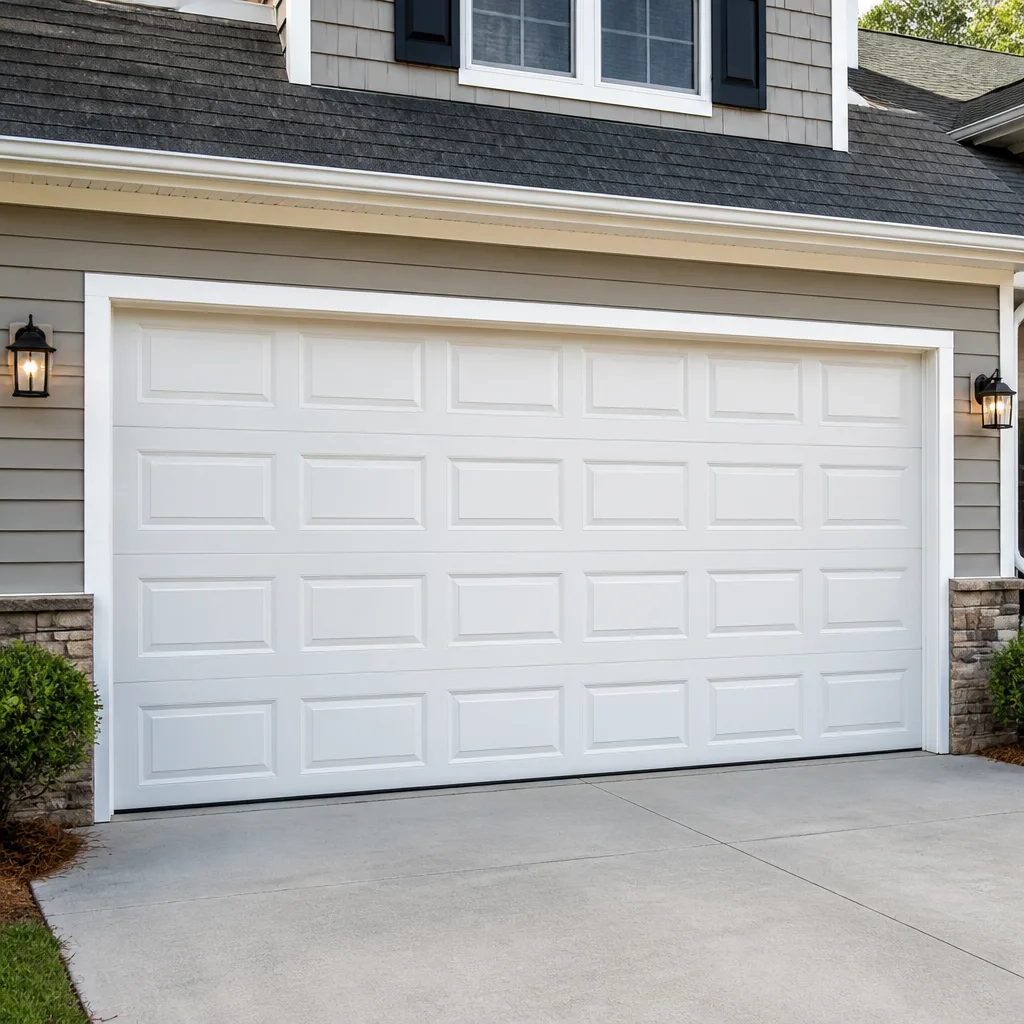 Raised-panel steel
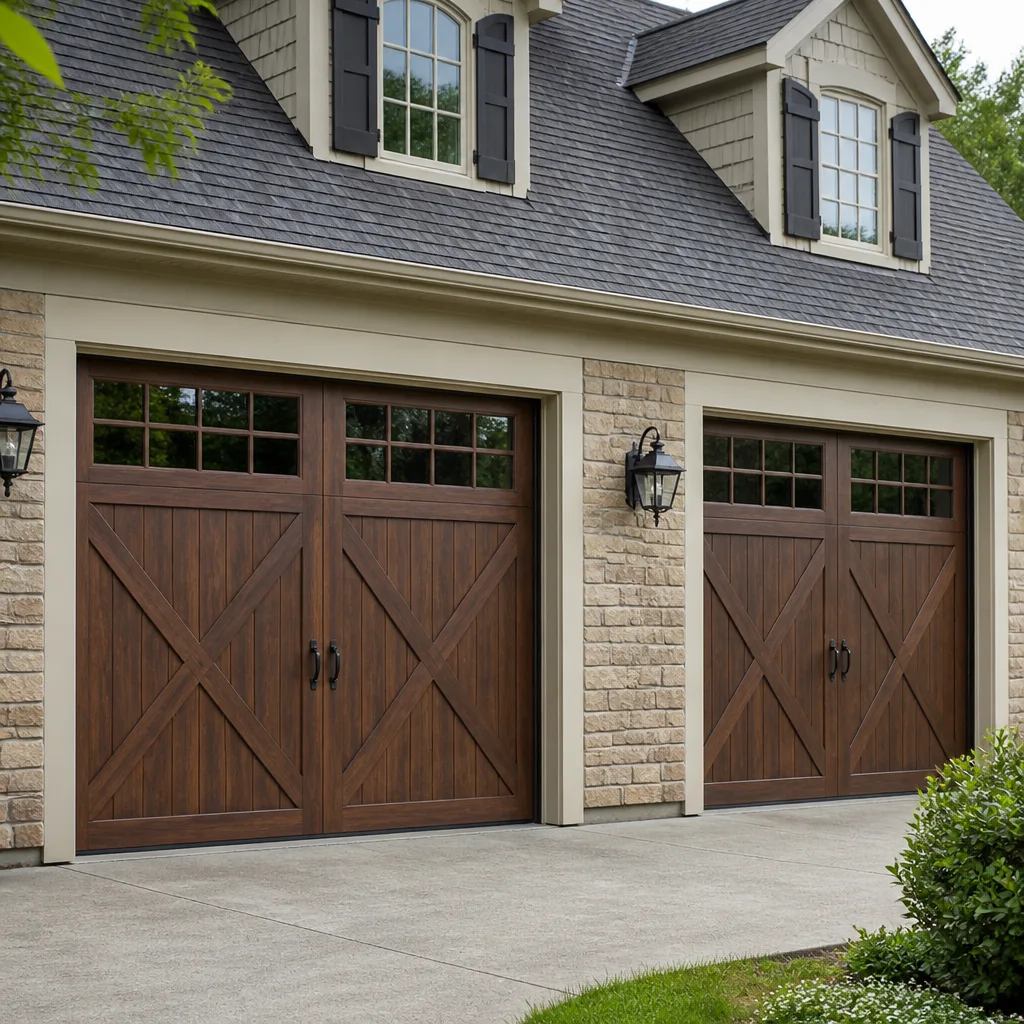 Carriage house
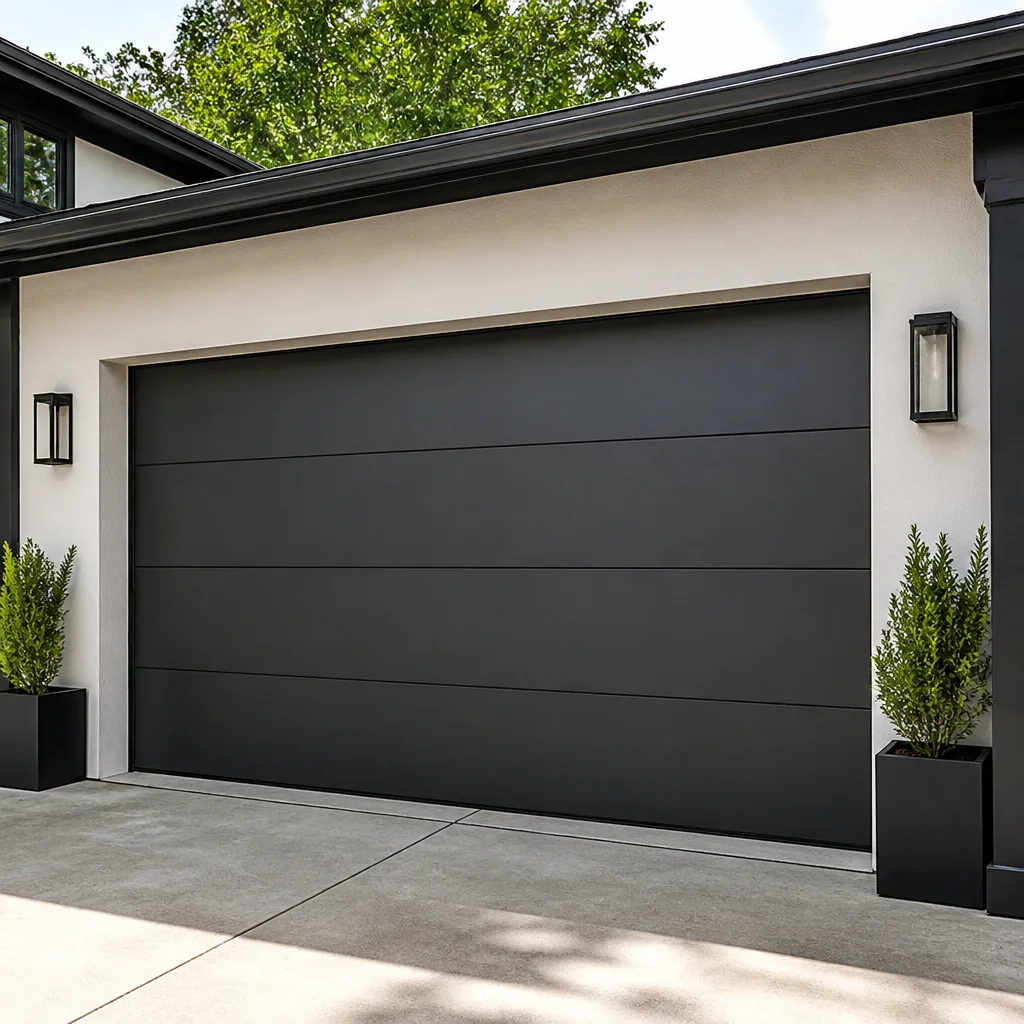 Modern flush
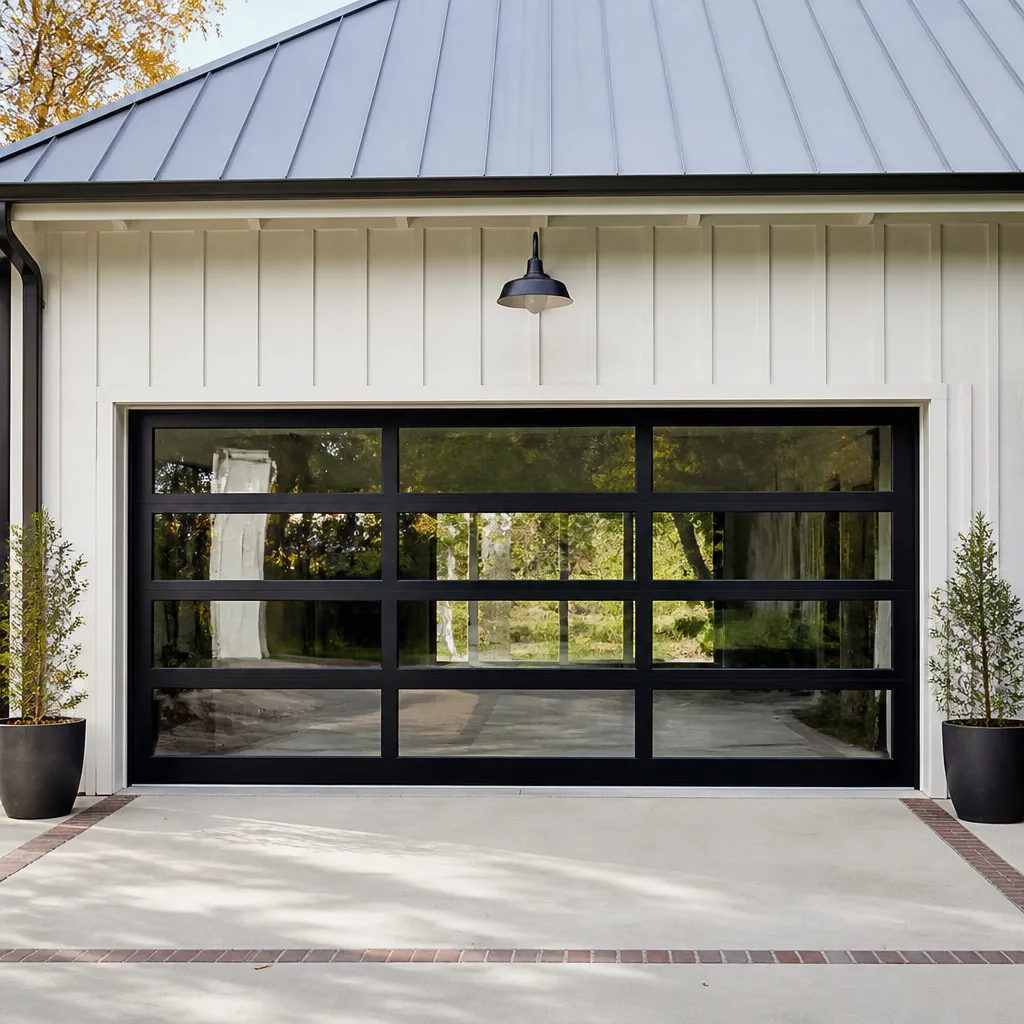 Full-view glass
 LiftMaster openers
 Chamberlain openers
Full 25-point door and opener safety check with every visit - springs, cables, rollers, tracks, and your LiftMaster or Chamberlain opener included
You get a price before we start. It does not change when the pro arrives.
Get your free estimateGarage Door Emergency Preparedness Guide for Joliet Homes
During a Joliet power outage, the most common reason homeowners can’t get their car out isn’t a failed opener. It’s that they’ve never pulled the emergency release cord, and they don’t know their door disconnects differently than the one their neighbor owns. Four opener families dominate the garages here, and each releases, re-engages, and fails in its own way. The ten minutes you spend learning yours now decide whether a spring snaps at 10pm and you lose an evening, or you lose a full day. This guide walks through release cords, stuck doors, outages, phone triage, and the three preventive steps that cancel most emergency calls before they happen in Joliet.
Quick Answer
The best garage door emergency prep for a Joliet home is knowing three things before you need them: where your emergency release cord is and how it works on your specific opener brand, how to tell a broken spring from an opener problem from a track obstruction, and how to get the door open and closed manually without bending panels or stripping the opener’s drive gear. Pair that knowledge with a backup-battery opener and a second way into the house, and most failures stop being emergencies. When something does break, call us at (888) 857-5215. We answer 24/7. Fast dispatch from 7am to 7pm, Sunday through Friday.
Styles & brands we work with
- Raised-panel steel
- Carriage house
- Modern flush
- Full-view glass
- LiftMaster openers
- Chamberlain openers
Table of Contents
- How Does the Emergency Release Cord Work on Your Opener Brand?
- What Should You Do When the Door Is Stuck Halfway?
- Power Outage Protocol for Joliet Homes
- How to Triage a Broken Door Over the Phone
- Three Preventive Steps That Eliminate Most Emergency Calls
- Why Joliet Winters Make Doors Fail
- What Belongs in a Garage Door Emergency Kit
- When to Call a Professional
How Does the Emergency Release Cord Work on Your Opener Brand?
The emergency release cord disconnects your door from the opener so you can lift it by hand. The cord itself looks the same on almost every unit: a red handle hanging from a trolley. What changes between brands is what you pull, how hard, and what happens after. In our experience, that’s where homeowners in Joliet get into trouble.
Four opener families show up in Joliet garages more than any others: LiftMaster and Chamberlain (the same company owns both), Craftsman, Genie, and older chain-drive units that have been turning for a long time. Here’s how each one releases:
- LiftMaster and Chamberlain: These use a trolley with a spring-loaded release. Pull the red cord straight down toward the floor. On newer units the trolley may include a lockout that keeps it from re-engaging accidentally while you’re lifting. If it feels stuck, don’t yank. Look at the outer trolley and confirm the release lever has swung fully to the disengaged side.
- Craftsman: Craftsman openers sold through Sears used a similar trolley design, but older models have a shorter cord and a stiffer release. Pull down and slightly toward the door. On some units the cord attaches to a lever you may need to push sideways before it lets go.
- Genie: Genie screw-drive and belt-drive units often use a different trolley design. The release is usually a lever on the carriage rather than a simple pull cord. Read the label on the trolley before applying force; a few Genie models require pulling the cord and lifting the lever at the same time.
- Older chain-drive units: These are the most stubborn. Cords fray, trolleys rust, and the release lever can seize into position. A firm, steady pull straight down is the correct method. A jerking motion is what bends things.
Once the door is disconnected, lift it slowly with both hands. A garage door without a working opener is heavy, and a door with a broken spring is heavier still. If it won’t lift at all, stop and call us at (888) 857-5215 for garage door repair in Joliet. We answer 24/7.
What Should You Do When the Door Is Stuck Halfway?
A door stuck halfway is one of the most common calls we get, and the fix depends entirely on which of three things has failed. Work through the sequence below in order. Don’t skip a step and don’t force the door with the opener; running a jammed motor is how openers get ruined.
- Stop pressing the button. A stuck door that won’t respond to the opener is usually a symptom, not a cause. Repeated cycling puts strain on the motor, the gears, and the springs.
- Look at the springs. Torsion springs run along the shaft above the door. Extension springs run along the tracks on either side. If one is visibly broken, snapped, or hanging loose, stop here. A door with a broken spring is not safe to lift by hand, and forcing it can cause the door to fall. This is the one thing worth calling about immediately.
- Check the tracks. Look for a bent track, a roller that has popped out, or an object wedged in the gap between the door and the frame. A single bent track can catch a roller and stall the door mid-travel.
- Test the opener manually. Pull the emergency release cord, then try to lift the door by hand. If it moves freely, the door and springs are likely fine and the opener is the problem. If it won’t budge, the trouble is in the door itself.
- Look at the sensors. Small LED lights on the safety sensors near the floor should be solid, not blinking. A blinking sensor can stop a door mid-travel on some openers.
Nine times out of ten, homeowners who call us from Joliet describe a door that’s stuck halfway, and the cause is either a broken spring or a track that took a hit from a car bumper. Our technicians have up to 9 years of experience, and a quick walk-through on the phone often tells us which problem it is before we head out.
Power Outage Protocol for Joliet Homes
When the power drops during a summer storm or a winter ice event, your opener stops working but your door doesn’t need to. The steps below get you in and out manually without damaging the door or the opener, and they get you back to normal once the lights come back on.
Getting Out and Getting Back In
- Locate the release cord before you need it. It’s the red handle hanging from the trolley. If yours has been cut off or tied up, that’s a problem to fix now, not later.
- Pull the cord to disconnect. The trolley separates from the door arm, and the door is now a manual door.
- Lift the door slowly with both hands. Open it only as far as you need to get the car out. Pushing it all the way up isn’t necessary and is harder on your back.
- Close the door gently by hand. Let it settle into the frame. Don’t slam it. Don’t try to lock it if the opener is disconnected; just let it rest closed.
- Don’t leave the door disconnected for long periods. A disconnected door can drift open, and if you drive off with it up, you’ll be coming home to a security problem instead of an inconvenience.
Re-Engaging the Drive After Power Returns
When the power is back, press the wall button once to bring the trolley back into range. Then pull the release cord once more to reset it, and run the opener through one complete cycle with the door connected. Watch it go up and down without interruption. If the trolley doesn’t reconnect on the first try, cycle the opener again. On LiftMaster and Chamberlain units the trolley re-engages on the next down-stroke. On older chain-drive models it sometimes takes a second attempt.
If the door won’t reconnect or the opener runs but the door doesn’t move, call us at (888) 857-5215. We answer 24/7, and we can talk you through the reconnect or set up a visit. A call outside dispatch hours is booked into the next opening, Sunday through Friday, 7am to 7pm.
How to Triage a Broken Door Over the Phone
Most garage door problems fall into two categories: urgent and can wait until morning. Knowing which one you’re dealing with saves you a night of worry and, sometimes, an unnecessary call. Here’s how to tell over the phone:
Call Now (Urgent)
- A door hanging crooked or off one track. If the door is visibly uneven, the cables or springs have likely failed. Don’t run the opener. Don’t try to close it by force.
- A broken spring with the door down. The door is stuck closed, but that also means the springs are under tension and the cables may be loose. This is a trained-professional job.
- Cables that have snapped or popped off a drum. Cables under tension can cause serious injury. Keep everyone clear of the door and call.
- A car trapped inside during a storm or medical situation. This is where a manual release saves the day. If you don’t know how to use it, call us and we’ll walk you through it.
Can Wait Until Morning
- The opener hums but the door doesn’t move. On a disengaged door, that’s a symptom of a stripped gear or a failing motor. Not dangerous, just inconvenient. Manual operation works fine.
- Remote or keypad stops working. Usually a battery or a programming issue. Your wall button likely still works.
- A sensor light blinking and the door reversing. Check for an obstruction or an alignment problem first. If the alignment is off, it can wait until the next scheduled visit.
When you call, describe what you see, what you hear, and whether the door is up, down, or halfway. That’s enough for us to tell you whether the door is safe or urgent. Call (888) 857-5215. We answer 24/7. Fast dispatch from 7am to 7pm, Sunday through Friday.
Three Preventive Steps That Eliminate Most Emergency Calls
Here’s the premise of this whole guide: prep beats repair. In our experience, most emergency calls we handle in Joliet could have been prevented by one of three steps done weeks or months earlier.
1. Install a Backup-Battery Opener
A backup-battery opener keeps the door functioning for a limited number of cycles during an outage. LiftMaster and Chamberlain both make units that include a battery backup in the head, and Genie offers compatible systems. If your current opener doesn’t have one, this is the single most useful upgrade you can make for emergency readiness. It also buys you time to open the door manually if you need to. When you’re ready, we install backup-battery openers as part of our garage door opener repair work. If your unit is a newer myQ-enabled LiftMaster or a decade-old Craftsman, we service it, and a free measure confirms the right replacement.
2. Maintain the Manual Lock
Most older garage doors have a manual slide lock, and most of them never get oiled. A lock that’s seized can stop a door mid-travel on a disconnected system and confuse the opener on a connected one. A few drops of light oil twice a year keep it free. If the slide lock is stiff, check it now, before the day you actually need it.
3. Plan a Second Way Into the House
If your garage is attached and the only door into the house is through the garage, a failed door locks you out of the house, not just the garage. Confirm that your front door key works, that your keypad is programmed, and that you know the code. If your garage door opener is your only way in, this is the prep step to fix first.
Why Joliet Winters Make Doors Fail
Joliet’s winters bring freeze-thaw cycles, and those cycles are rough on a garage door. Metal panels expand and contract with temperature swings. The bottom seal can freeze to the concrete, and the opener has to work harder to break it loose. Tracks shift slightly as frost heaves into the ground, and a track that was in alignment in October can be off by a fraction by January. Add salt and road grit tracked in from the driveway, and the rollers and hinges get dry and stiff.
These aren’t dramatic failures. They’re slow ones. A door that’s been fighting a frozen seal for a season is a door whose opener is doing more work than it should. Two things help:
- Clear snow and ice away from the bottom seal after every storm, so the door doesn’t get a chance to freeze to the concrete.
- Run the door through a full cycle the night before a forecast ice event, and again after. It clears a path through the ice before it hardens.
When a door does fail in the cold, the diagnosis matters. Spring failures look the same as opener failures from the outside. A trained eye on the spot saves you from replacing a motor when the actual problem was a spring, or vice versa. If the door fails and won’t come back, call us at (888) 857-5215 for garage door repair. Free estimates, and the price is quoted and agreed before any work starts.
What Belongs in a Garage Door Emergency Kit
A garage door emergency kit costs almost nothing and takes an hour to put together. The point isn’t to fix a broken spring yourself. It’s to keep a stuck door from turning into a lost day.
- A flashlight that works. The garage gets dark fast in a storm, and the trolley is above your head. Test it twice a year.
- Gloves. The tracks and hinges have sharp edges, and a stuck roller can grab a hand.
- Spare opener remote batteries. Check the size your remote uses and keep two.
- A printed copy of your opener’s manual. If you don’t have it, look up the model number on the opener head and download a PDF. Save it to your phone. Craftsman and Wayne Dalton models especially have model-specific release and re-engagement steps that differ from the generic version.
- The wall button code and the exterior keypad code, written down. Store them in the house, not the garage.
- Our number. (888) 857-5215. We answer 24/7.
A backup-battery opener belongs on this list too, but it’s an upgrade rather than a kit item. Any of the major brands: LiftMaster, Chamberlain, Genie, Raynor, Wayne Dalton, Clopay, Amarr, or Craftsman. We service all of them.
Common Mistakes to Avoid
- Pulling the emergency release with the door up. A door that’s disconnected while open is a door that can slam. The release should only be pulled with the door in the down position.
- Running the opener repeatedly on a stuck door. Every cycle with the door jammed strains the motor, strips the gears, and turns a $200 spring repair into an opener replacement. Stop pressing the button.
- Typhoon-ing the door by hand. Lifting a disconnected panel door by the handle, with one hand, in a hurry, is how panels get bent and frames get pulled out of square. Both hands, slow lift.
- Treating the emergency release cord as optional. Some homeowners have cut it off because it dangled in the way of a car roof. That cord is your only manual access when the power is out. If it’s gone, have it replaced.
- Assuming the opener is the problem. In our experience, a large share of “the opener isn’t working” calls turn out to be spring, cable, or track failures. Diagnose the door before you diagnose the motor.
- Ignoring a door that’s been getting harder to close. Slow downs, grinding noises, vibration: these are pre-failure signals, and they’re the best time to get a technician out. Ignoring them for a few months in a Joliet winter is how a scheduled visit turns into an emergency one.
- Never testing the manual release. If you’ve never pulled the cord, you don’t actually know it works. Test it once a year in the down position, with the door disconnected, and reconnect it. That test is the whole prep step.
See the difference
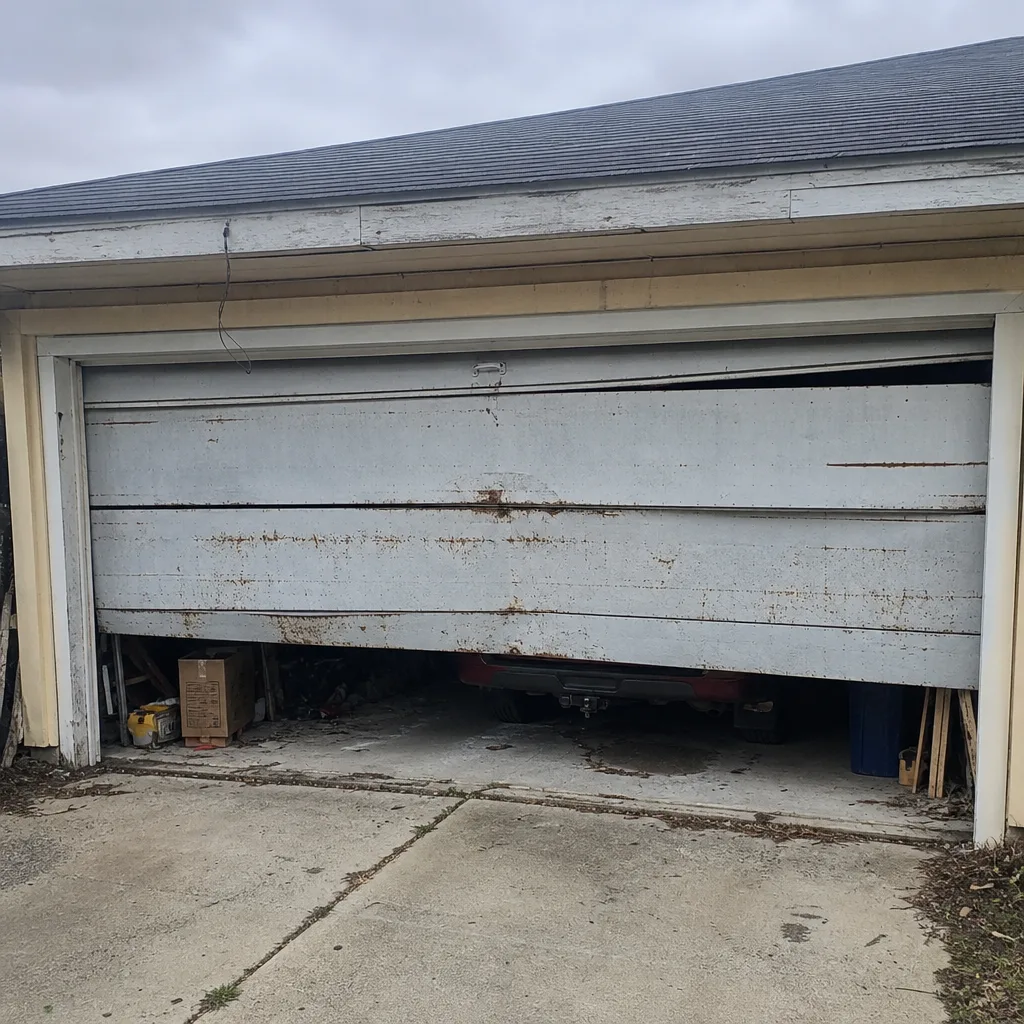 Before
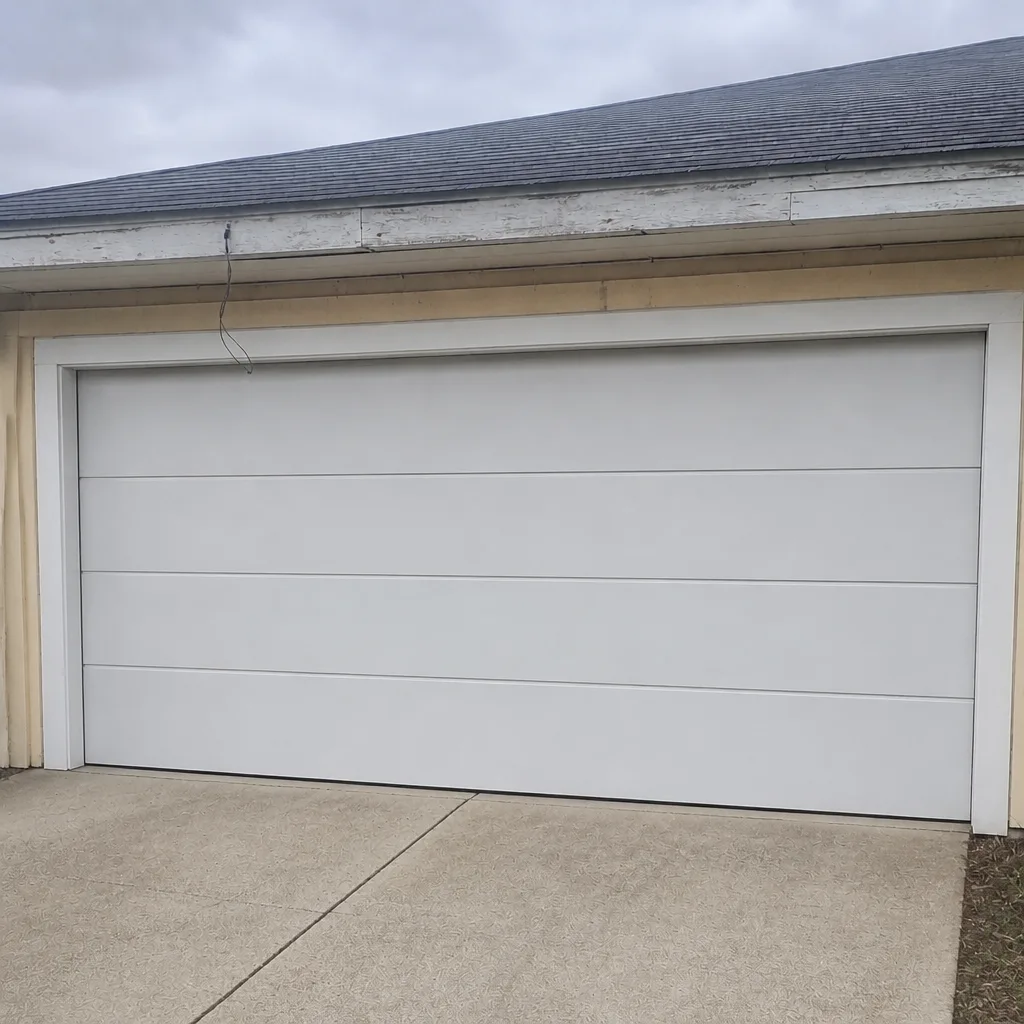 After
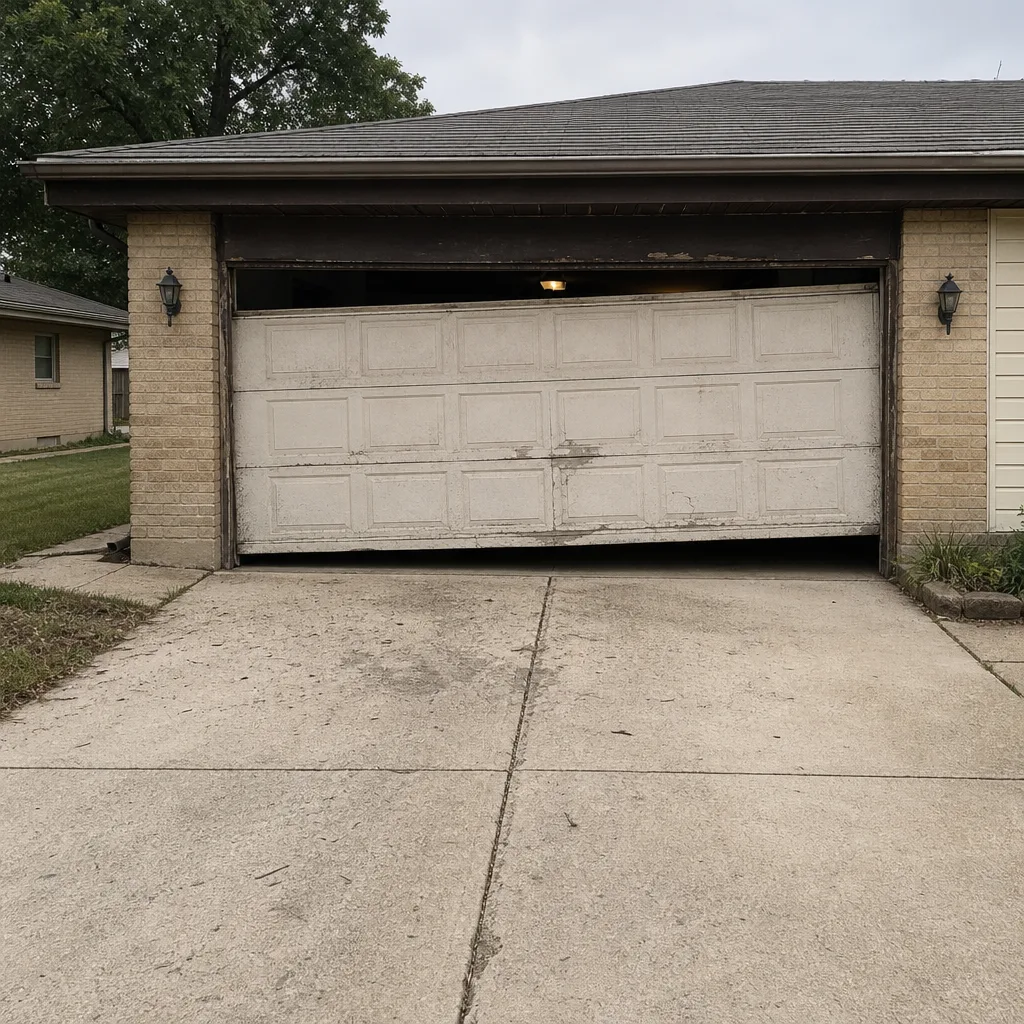 Before
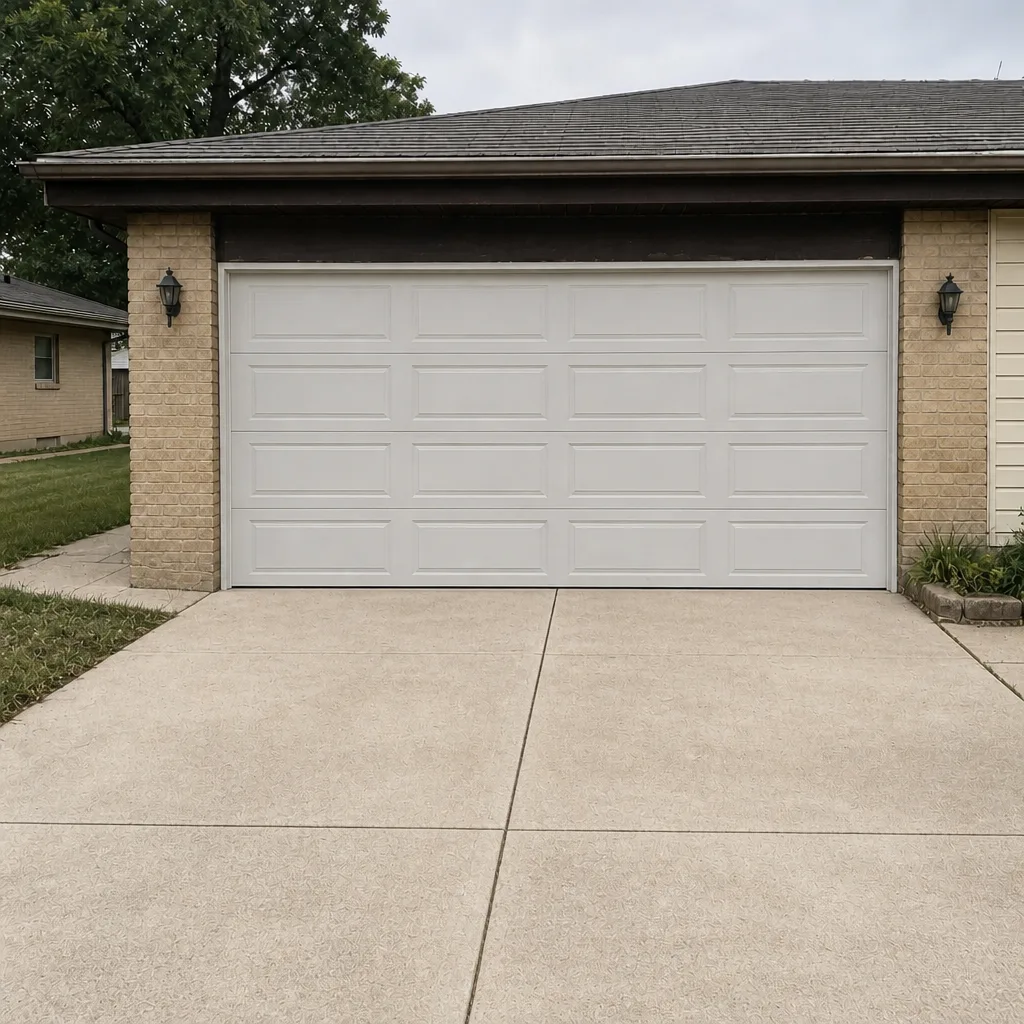 After
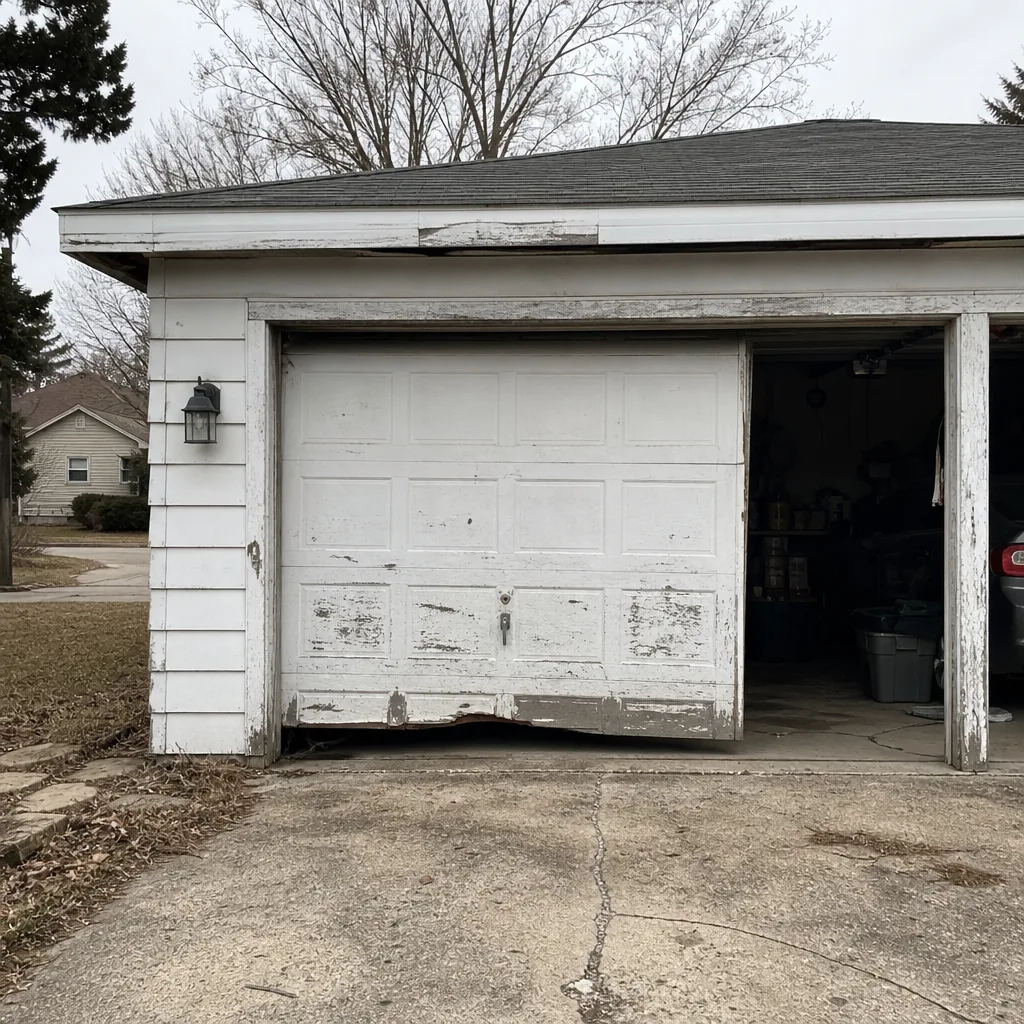 Before
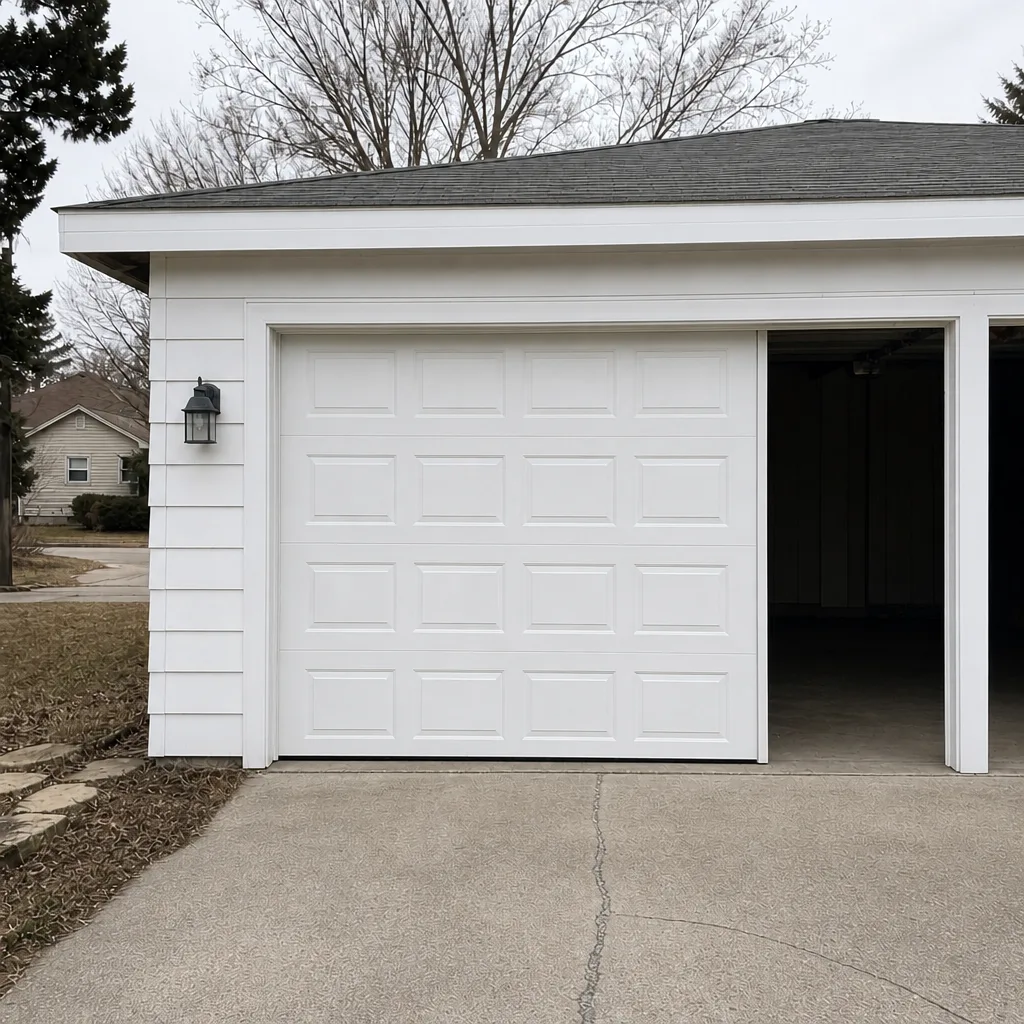 After
When to Call a Professional
Call us when the door is stuck in any position you can’t fix yourself within 10 minutes, when a spring or cable is visibly broken, when the door hangs crooked, or when the opener runs with the door disconnected. Broken springs and cables carry the highest risk on the whole system; high-tension spring and cable work should only be handled by a trained technician. Don’t try to repair them yourself. Call for any door that’s failed to close in a storm, when the tracks have visibly shifted after a freeze, or when a remote or keypad that used to work has stopped.
Remington Garage Door Repair offers free estimates in Joliet. Call (888) 857-5215. We answer 24/7. Fast dispatch from 7am to 7pm, Sunday through Friday. The price is quoted and agreed before any work starts, and the written estimate sets the final price. If you’re not sure whether your situation is an emergency, call anyway. A two-minute conversation sorts it out.
If you’ve got a stuck door and want a specialist to look at it, our garage door repair team in Joliet is the right place to start.
Frequently Asked Questions
Check the springs and tracks before you touch the opener. A visibly broken spring or a bent track means the door is a mechanical problem, not an electrical one, and pressing the button won’t help. If the springs and tracks look intact, check the opener’s safety sensor lights and try the wall button instead of the remote. If none of that solves it, call us at (888) 857-5215 for an exact quote. Estimates are free.
Pull the red emergency release cord straight down from the trolley, then lift the door slowly with both hands. The door is now disconnected from the opener and operates manually. Close it gently by hand, and reconnect it once power returns by running the opener through a full cycle. If the trolley doesn’t catch on the first attempt, cycle it again. If it still won’t reconnect, call us. We answer 24/7.
Yes, if the door is up, if the cables are loose, or if a car is trapped. No, if the door is down and intact and you can wait until morning. A broken spring with the door closed is inconvenient but not dangerous. A broken spring with the door up is a hazard, because the door is held only by the opener. Call (888) 857-5215 if you’re unsure. We can triage over the phone.
Same-day service is available for repair calls, and we dispatch from 7am to 7pm, Sunday through Friday. Call (888) 857-5215. We answer 24/7. A call outside dispatch hours is booked into the next opening. For installation or new-door work, the schedule is measured, ordered, and set by written estimate rather than same-day.
No. The price is quoted and agreed before any work starts. If the technician finds a different problem than what was diagnosed over the phone, they’ll walk you through what they found and what it will cost before any repair begins. If that price doesn’t work for you, you’re free to decline. The written estimate sets the final price.
Yes. Our technicians are licensed and insured and handle garage doors and openers as their only trade. They service LiftMaster, Chamberlain, Genie, Clopay, Amarr, Wayne Dalton, Craftsman, and Raynor, and technicians have up to 9 years of experience. Call (888) 857-5215 for an exact quote. Estimates are free.
Stuck garage door repairs are quoted per job, and the price depends on what’s actually failed: spring, track, roller, cable, sensor, or opener. We give free estimates and put the price in writing before any work starts, so there’s no surprise on the invoice. Call (888) 857-5215 and describe what the door is doing. We can often give you a range over the phone and confirm it on the visit.
The Bottom Line
The ten minutes you spend learning your opener’s release cord, testing your manual lock, and planning a second entry point are worth more than any emergency repair. Four opener families dominate Joliet garages: LiftMaster and Chamberlain, Craftsman, Genie, and older chain-drive units. Each releases a little differently. A backup-battery opener, a maintained lock, and a known second way into the house cover the three most common emergency calls we handle. When a door does fail, triage it by symptom: broken spring or crooked door means call now; anything else can often wait. Remington Garage Door Repair is a Joliet specialist. Garage doors are all we do. Call (888) 857-5215 for a free estimate. We answer 24/7. Fast dispatch from 7am to 7pm, Sunday through Friday. The price is quoted and agreed before any work starts.
Written by the team at Remington Garage Door Repair.