
Last updated November 15, 2026
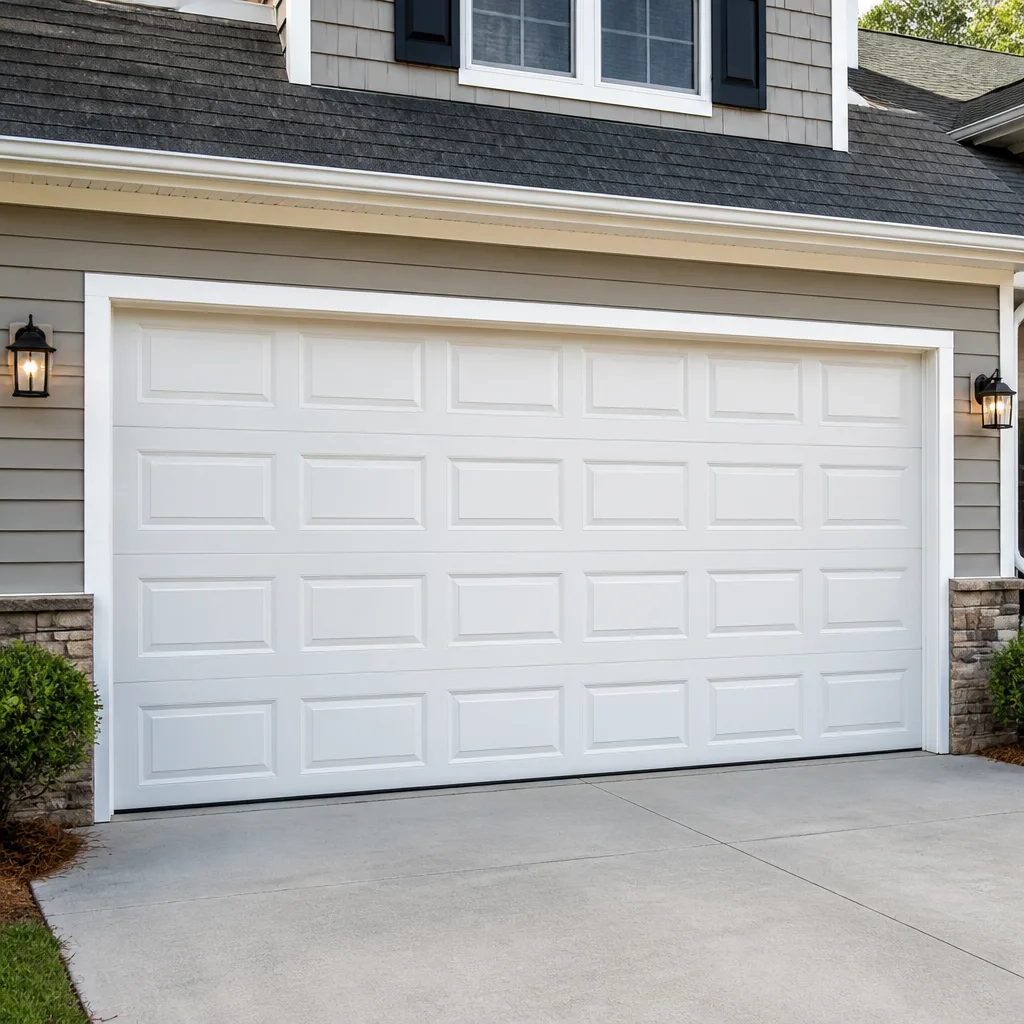 Raised-panel steel
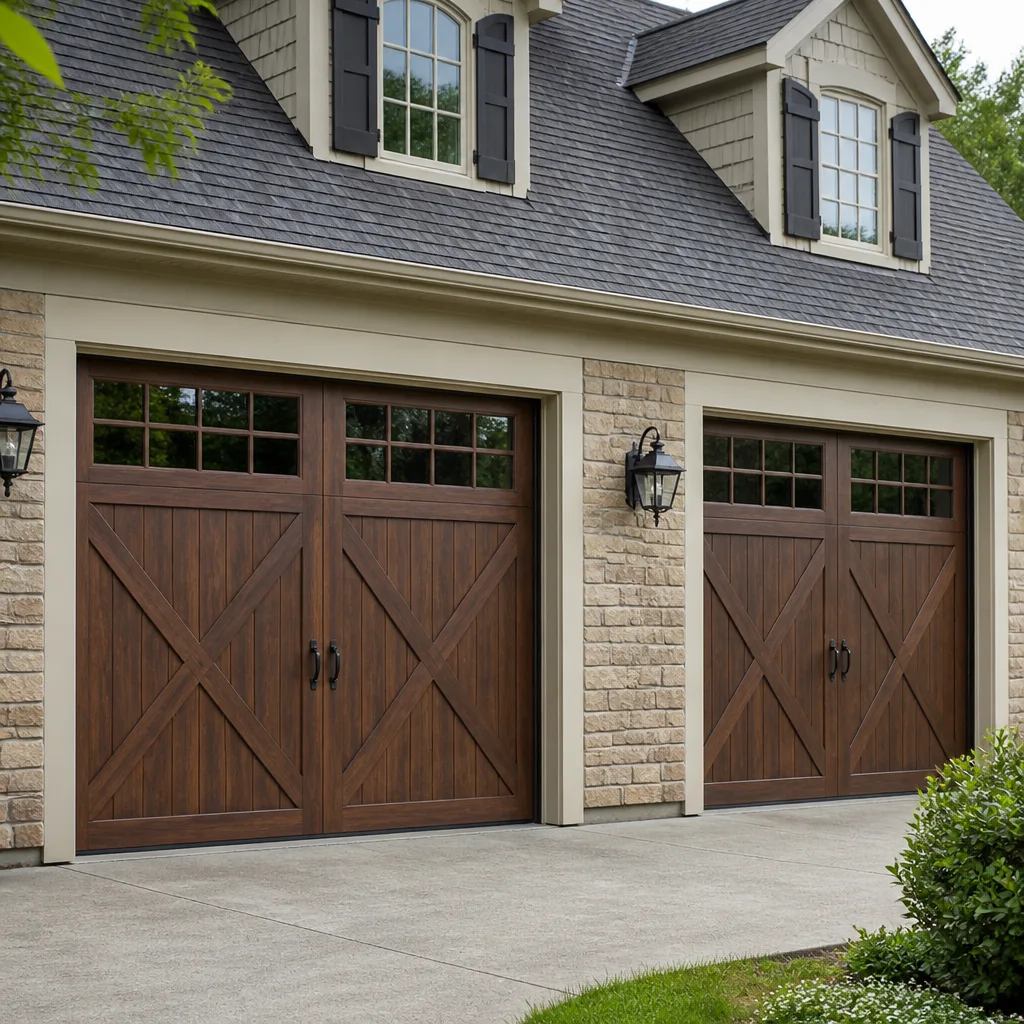 Carriage house
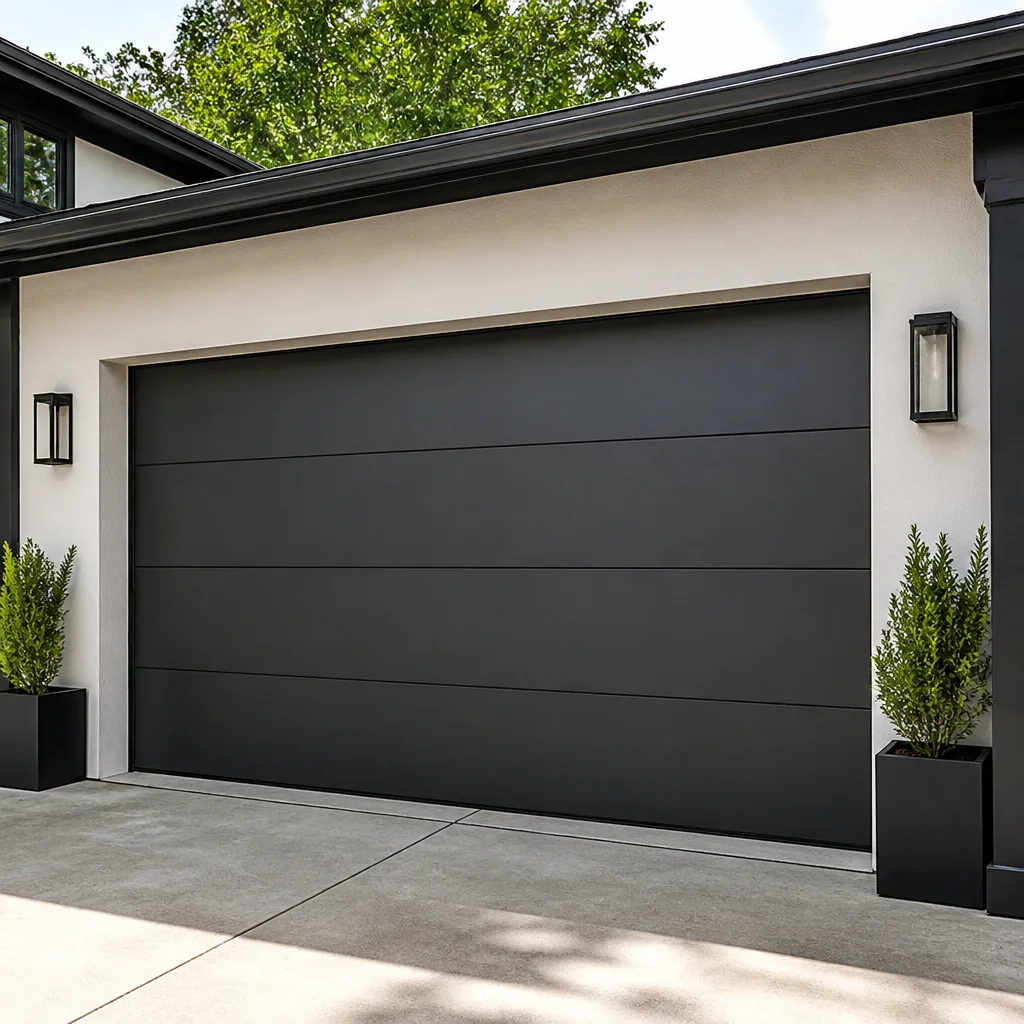 Modern flush
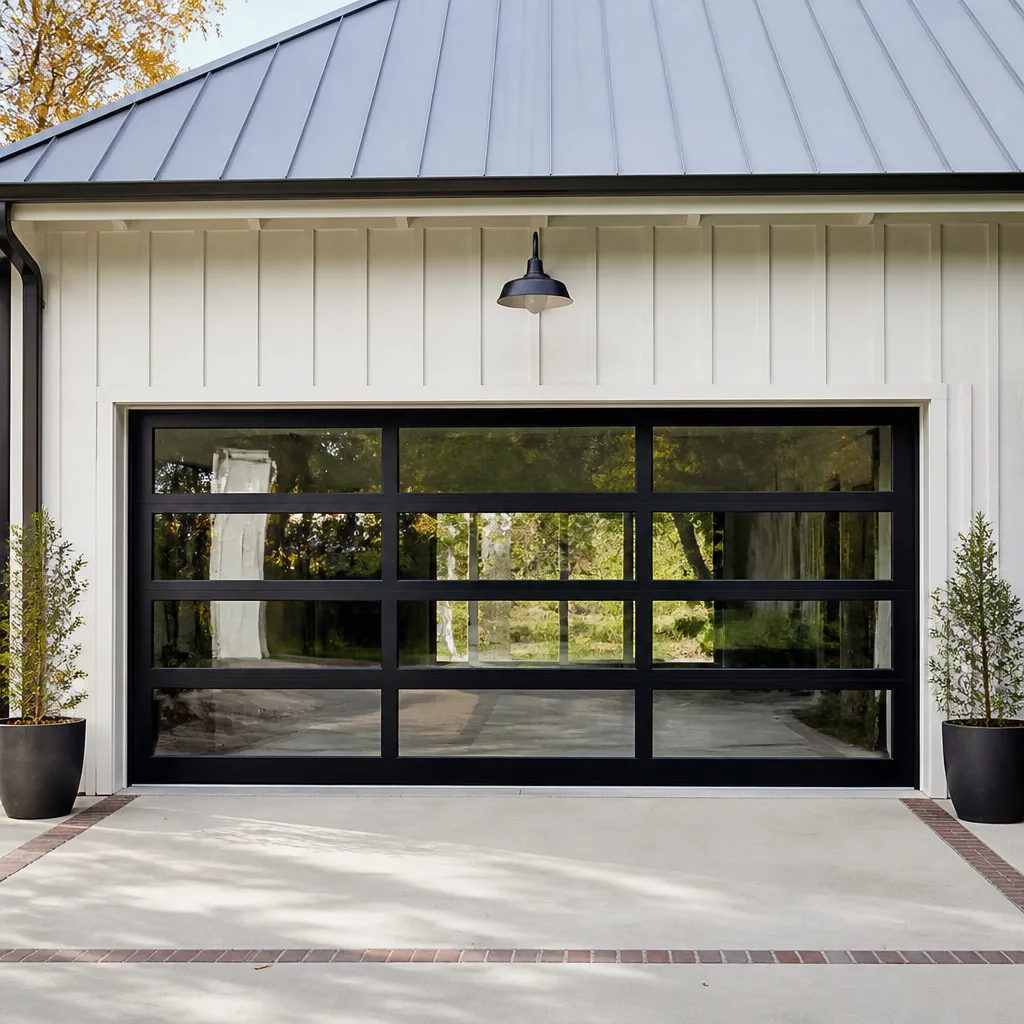 Full-view glass
 LiftMaster openers
 Chamberlain openers
Full 25-point door and opener safety check with every visit - springs, cables, rollers, tracks, and your LiftMaster or Chamberlain opener included
You get a price before we start. It does not change when the pro arrives.
Get your free estimateGarage Door Warning Signs: A Joliet Homeowner’s Reference Guide
Two things look unrelated until you know what causes them. A door that reverses the moment it touches the floor and a door that shudders on the way up get filed as different problems by most homeowners. In Joliet homes, both often trace back to the same small culprits: a dirty photo-eye or a track that’s slipped out of alignment. And of the two, only one usually needs a technician this week. That’s the gap this guide fills. Symptom lists are everywhere. What’s missing is the cause behind each symptom and a clear sense of how fast it needs attention. Below you’ll find a three-tier urgency system, sound-based diagnosis, and the visual clues that go unnoticed until they become failures. You’ll finish knowing which noises and behaviors can wait, which can’t, and why.
Quick Answer
Garage door warning signs fall into three urgency levels. Stop using the door immediately if you see a frayed cable, a bent track, or a snapped spring. Schedule repair within the week for grinding noises, uneven movement, or a door that reverses before reaching the floor. Watch and maintain for squeaks, worn weather seals, and slow opener response. Most warning signs in Joliet are cheap to fix early and expensive to ignore.
Styles & brands we work with
- Raised-panel steel
- Carriage house
- Modern flush
- Full-view glass
- LiftMaster openers
- Chamberlain openers
Table of Contents
- The Three-Tier Urgency System
- What Each Garage Door Sound Is Telling You
- Visual Warning Signs Most Homeowners Walk Past
- Opener Problems vs. Door Problems: Getting the Diagnosis Right
- Joliet Seasonal Patterns: Winter vs. Summer Warning Signs
- The Signs You Should Never Investigate Yourself
- A Monthly Inspection You Can Do in Ten Minutes
The Three-Tier Urgency System
Most warning-sign articles treat every symptom the same. That’s how homeowners end up either panicking over a squeaky roller or ignoring a cable that’s about to let go. We use a simpler framework in the field, and you can apply it yourself. Every symptom gets sorted into one of three buckets: Stop Using It Now, Schedule Repair This Week, or Watch and Maintain.
The logic behind the tiers is straightforward. The first tier is about safety and structural failure. If a component holds the door’s weight or keeps it moving on its tracks, and it’s damaged, the door shouldn’t move. The second tier is about a functioning door that’s degrading. It still works, but something is wearing, and the wear will get more expensive the longer it’s ignored. The third tier is maintenance. The door operates normally, but small items like seals, lubrication, and roller condition need attention before they graduate into tier two.
Tier 1: Stop Using It Now
These signs mean the door shouldn’t be operated until a technician has looked at it. The risk of injury or a sudden drop is real, and these components carry high tension or hold the whole door.
- A cable that is frayed, kinked, or hanging loose on one side
- A visibly bent or bowed track, especially near the bottom curve
- A snapped or stretched torsion spring (the door may drop automatically)
- A door that is hanging off its tracks or visibly crooked
- A door that slams shut when you disengage the opener
Tier 2: Schedule Repair This Week
These signs point to a component that’s still working but declining. The door may still operate, but continuing to cycle it accelerates wear on other parts.
- Grinding or popping noises during operation
- The door reverses before it hits the floor
- The door travels unevenly (one side faster than the other)
- Rollers making a rattling sound as the door moves
- Opener motor runs but the door doesn’t move
Tier 3: Watch and Maintain
These are small issues worth a monthly look. Addressing them now keeps them from becoming tier-two items.
- Squeaking hinges or rollers
- A weather seal that’s cracking or stiffening
- A slow or delayed opener response
- Small dents in the lowest panel
We’ve watched homeowners misapply this system in both directions – ignoring a bent track while panicking over a squeak. A quick call settles which tier you’re in. For reference, our team handles all three at Remington Garage Door Repair, so we see the full range every day.
What Each Garage Door Sound Is Telling You
Sound is the most reliable diagnostic clue a garage door gives you, and it’s the one most homeowners file under “normal.” It isn’t. The type of noise points to a specific mechanical cause. If you can describe the sound to a technician, you’ve already narrowed the diagnosis before anyone arrives. Here’s how we sort them.
Grinding
Grinding almost always comes from metal-on-metal contact, and the usual culprit is a dry or worn roller running against its track. On torsion-spring doors, it can also come from a damaged bearing plate near the springs. Grinding usually means tier two. Ignoring it wears the roller and the track, which turns a small repair into a bigger one. If the grinding is loud and sudden, treat it as tier one until someone’s looked at it.
Popping
A popping or snapping sound is usually one of two things: a torsion spring that’s under uneven tension, or a cable that’s slipping badly in its drum. Popping is rarely a minor issue. It tends to get louder and more frequent, and it often precedes a component failure. Treat popping as tier one if it happens at the top of the door’s travel, tier two if you only hear it near the floor.
Squealing
Squealing is usually a lubrication problem – dry hinges, dry rollers, or a dry torsion bar. On its own, squealing is tier three. It’s cosmetic until the lack of lubrication wears the parts. A few distinct drops of lubricant on the roller stems and hinge points will quiet it down for a while, but persistent squealing after lubrication points to worn rollers.
Banging
A single sharp bang at the end of opening or closing usually means the door is hitting its travel limit too hard. A repeated bang or thud during travel points to a loose panel, a damaged roller, or a bent track that’s causing the door to jump. Banging on an opener with a worn plastic gear (common on older Craftsman and Genie units) can also sound like this. Banging is usually tier two, but if it started suddenly, stop and have it checked.
When the noise pattern points to the motor rather than the door, we go straight to opener work. That’s our focus at garage door opener repair, and the sound differences matter. A grinding opener motor is a different animal than a grinding roller.
Visual Warning Signs Most Homeowners Walk Past
Half the warning signs on a garage door are visual, and nearly all of them sit at eye level every time you pull into the driveway. The problem is that they develop slowly. A cable doesn’t fray overnight, and a roller doesn’t wear out in one cycle. Here’s what to actually look for on your next walk-around.
Frayed or Kinked Cables
Cables run along the sides of your door and wind around drums at the top. A healthy cable looks like a tight, uniform braid. A failing cable shows frayed strands near the drum, a kink in the middle, or rust spots along its length. In Joliet winters, freeze-thaw cycles and road salt tracked in on cars can accelerate rust on the cable ends. A single visibly broken strand is tier one. Cables are also under high tension, so don’t touch them.
Roller Wear Patterns
Rollers are the small wheels that ride the track. New rollers have a smooth, round profile and a clean stem. As they wear, you’ll see one side worn flat, a wobble in the roller itself, or the stem becoming loose in the hinge bracket. If the roller looks egg-shaped or has visible bearings poking out, it’s ready for replacement. Rollers can wear out anywhere, but the bottom set tends to wear first because they take the most load.
Bottom Seal Deterioration
The bottom seal is a rubber or vinyl strip that runs along the door’s lower edge. It has three stages of failure:
- Stiffening – the seal feels hard to the touch and loses flexibility.
- Cracking – visible splits appear in the rubber, usually at the corners.
- Chunking – pieces break off, leaving gaps the door sits against.
In Joliet, seals usually fail faster than in milder climates because the temperature swings between humid summers and hard cold snaps are tough on rubber. A stiff or cracked seal lets water and cold air under the door, and it’s a cheap fix long before it becomes a moisture problem.
Bent or Misaligned Tracks
Tracks should look perfectly parallel from the floor to the curved top section. A bend or a bow in the vertical section usually comes from impact (a car bumper, a bicycle, a garbage can) or from the door drifting in the track for months. A bent vertical track on the bottom edge is tier one. A slight bend near the horizontal section is usually tier two.
Opener Problems vs. Door Problems: Getting the Diagnosis Right
This is where more money gets wasted than anywhere else on a garage door. Someone replaces an opener motor when the real problem was a stuck roller. Or replaces a spring when the real problem was an opener that lost its limit setting. The symptoms overlap, so the diagnosis has to be split. Here’s how we sort it.
A few guiding rules we use. First, listen. If the motor runs but the door doesn’t move, the problem is almost certainly in the door or drive system (chain, belt, screw drive, or the door’s balance), not the motor. If the motor makes no sound at all, the problem is usually the opener’s motor, capacitors, or control board. Second, check the balance. Disengage the opener (usually a red pull cord) and lift the door halfway by hand. A balanced door should stay put. A door that slams down or feels extremely heavy has a spring or balance problem, not an opener problem.
Symptoms That Are Almost Always Opener Issues
- Door reverses on the way down every time (often a dirty or misaligned safety sensor)
- Door opens only a few inches and stops (usually a limit switch or travel setting)
- Opener motor runs but the door doesn’t move (worn gear or broken chain/belt)
- Wall button doesn’t work but remote does (or vice versa) – usually a wiring or receiver issue
- Remote only works when you’re close (usually a battery, antenna, or interference issue)
- Opener beeps or flashes codes (a diagnostic code in the motor unit itself)
Symptoms That Are Almost Always Door or Hardware Issues
- Door feels heavy or slams when released from the opener
- Door travels unevenly (one side lags)
- Loud grinding, popping, or snapping coming from the door itself
- Visible fraying on the cables or a snapped spring
- Door off its tracks or visibly crooked
- Rollers that look worn or rattling in their brackets
In our experience, the most common misdiagnosis is a dirty safety sensor being blamed on the opener motor. If the door reverses every time, check the two photo-eye lenses first – they’re on either side of the door, near the floor. If they’re dusty or obscured, cleaning them may resolve it without a service call. If the door still misbehaves, you’re back to tier two. For a full diagnostic, our garage door repair team can sort the door from the opener in a single visit.
Joliet Seasonal Patterns: Winter vs. Summer Warning Signs
Garage doors in Joliet age on a specific yearly rhythm. Certain warning signs spike in winter, others in summer, and if you know the pattern you can anticipate problems before they happen. We see this play out every year in the neighborhoods around here.
Winter Warning Signs
Cold is hard on rubber and steel alike. Once temperatures stay below freezing for a stretch, the bottom seal stiffens and cracks faster, and any small gap where water got in the summer can freeze and split seams. Springs also behave differently in cold: torsion springs become less ductile and slightly more brittle as temperatures drop, which is why spring failures cluster in the coldest weeks. Any spring that pops in January is mostly a cold-brittleness story, though age and cycle count matter too.
If your door starts making a louder-than-usual clank in January, or the bottom seal starts sounding hard when you close the door by hand, that’s a seasonal signal. Older wooden doors in Joliet’s established neighborhoods also tend to swell in wet winters, which can shift the track alignment.
Summer Warning Signs
Summer brings a different set of issues. Heat expansion can push a track slightly out of alignment, especially on doors that see direct sun on the south or west side of the house. Opener motors run hotter in summer, and an aging opener that ran fine all winter can start tripping its thermal cutoff after a long afternoon of use. If the opener stops mid-cycle and starts working again an hour later, that’s usually a thermal overload – often a sign the opener is due for service or replacement.
Summer is also when door seals get a break. If the bottom seal survived winter but now has small cracks, it’s worth replacing before it hardens again in fall.
We’re local, and we take calls across the city throughout the year – from the older homes near the river to the newer subdivisions on the west side. If you want to know whether your sign is a seasonal one or a real problem, our Joliet team can talk it through.
The Signs You Should Never Investigate Yourself
Most of this guide is about diagnosing. This section is about knowing when to stop. Two components of a garage door are genuinely dangerous to touch: torsion springs and cables. Both carry enough stored energy to cause serious injury. There’s no troubleshooting step that makes working on them safe for a homeowner.
If your door has a snapped spring, a visibly stretched spring, a frayed or kinked cable, or a door hanging off its track, leave it where it is and call a trained technician. Don’t try to lift the door manually to get a car out – a door with a broken spring weighs far more than it feels like it should. Don’t try to reattach a cable to its drum. And don’t disengage the opener and lower the door by hand to close the garage for the night; a door with a failed spring can drop unexpectedly once the opener is released. Most cities require a permit for structural work on a garage door or its springs, though the exact rules vary – ask your city’s building department before you schedule anything.
We can’t stress this one enough. Every year we see doors that got worse because someone tried to “just nudge” a bent track back into place or spray a spring with lubricant to see if it would hold. Those are the calls that turn an easy repair into a full replacement. Our technicians have up to 9 years of experience handling exactly these components, and we’d rather talk you out of a DIY attempt than replace a panel that shouldn’t have needed replacing.
If you’re not sure whether your symptom is safe to look at yourself, call (888) 857-5215. We answer 24/7. Fast dispatch from 7am to 7pm, Sunday through Friday.
A Monthly Inspection You Can Do in Ten Minutes
A quick monthly walk-around catches most warning signs before they become tier-one problems. None of these steps require touching a spring or a cable directly – you’re just looking and listening.
- Walk the perimeter of the door. Look along each side, from bottom to top. Note anything that looks bent, loose, or misaligned.
- Look at the cables. Check for frayed strands, kinks, or rust near the drums at the top – from a distance, without touching.
- Look at the rollers. Are they round and smooth, or worn flat? Are any wobbling in their brackets?
- Check the bottom seal. Run a hand along it (with the door closed) and feel for stiffness or cracking. Look at the corners.
- Open and close the door and listen. Any new sound – grind, pop, squeal, or bang – is worth noting.
- Test the safety reverse. Put a small block or box in the door’s path and close it. The door should reverse when it contacts the object. If not, the sensors or opener need attention.
- Disengage the opener and test balance. Pull the red release cord and lift the door halfway. It should hold without help. If it drops or feels heavy, the springs or cables need a technician.
- Look at the opener light. A blinking light or a diagnostic code is the opener telling you something. Look at the motor unit’s manual for what it means.
Ten minutes a month catches most problems at tier three, when they’re cheapest to fix. Repeat the walk-around whenever the seasons change – especially as winter sets in and as it breaks in spring, when the most temperature-driven issues surface.
Common Mistakes to Avoid
- Blaming the opener first. Most “opener problems” turn out to be door or hardware issues – a worn roller, a heavy door, or a misaligned track. Replacing an opener motor that wasn’t broken is one of the most common repair mistakes we see in Joliet.
- Ignoring a dirty sensor. If the door reverses every time it closes, check the sensors before calling anyone. They’re the small photo-eyes near the floor on each side of the door, and dust, cobwebs, or a bumped bracket are all it takes.
- Lubricating a spring to fix a noise. A squeaking spring can be a sign of a real problem, and lubricant won’t fix it. Worse, the wrong lubricant on the wrong component can cause damage. Springs are under tension and shouldn’t be touched by a homeowner.
- Waiting on a bent track. A small bend that’s still “working” puts extra load on the rollers, cables, and opener. It costs less to fix a slight bend than to replace rollers, cables, and a motor because the bend was left alone for a year.
- Filing seal cracks as cosmetic. A stiff seal lets in water and cold air, and in Joliet’s winters that can lead to rusted hinges and frozen tracks. Replacing a seal is far cheaper than repairing the damage it causes.
- Assuming a loud door is “normal.” If your door has always been loud, that’s not a personality trait – it’s a sign that something on the door or opener is working harder than it should.
- Ignoring a heavy-feeling door. A door that’s become hard to lift by hand is a balance problem, usually a spring or cable issue. Continued opener use wears out the opener motor faster and adds risk.
- Assuming newer doors are exempt. A newer Clopay or Amarr door can still develop spring, roller, or seal issues. Age of installation isn’t the same as age of the components inside it.
See the difference
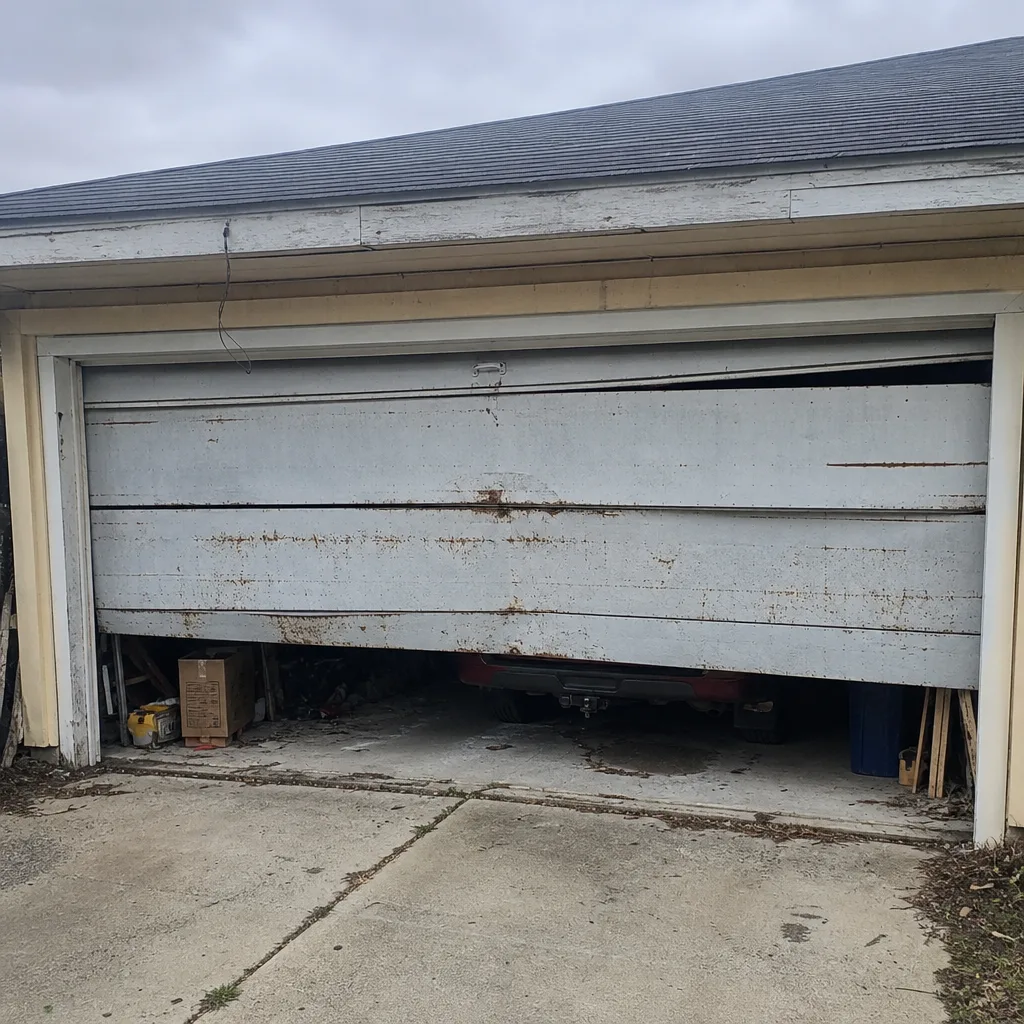 Before
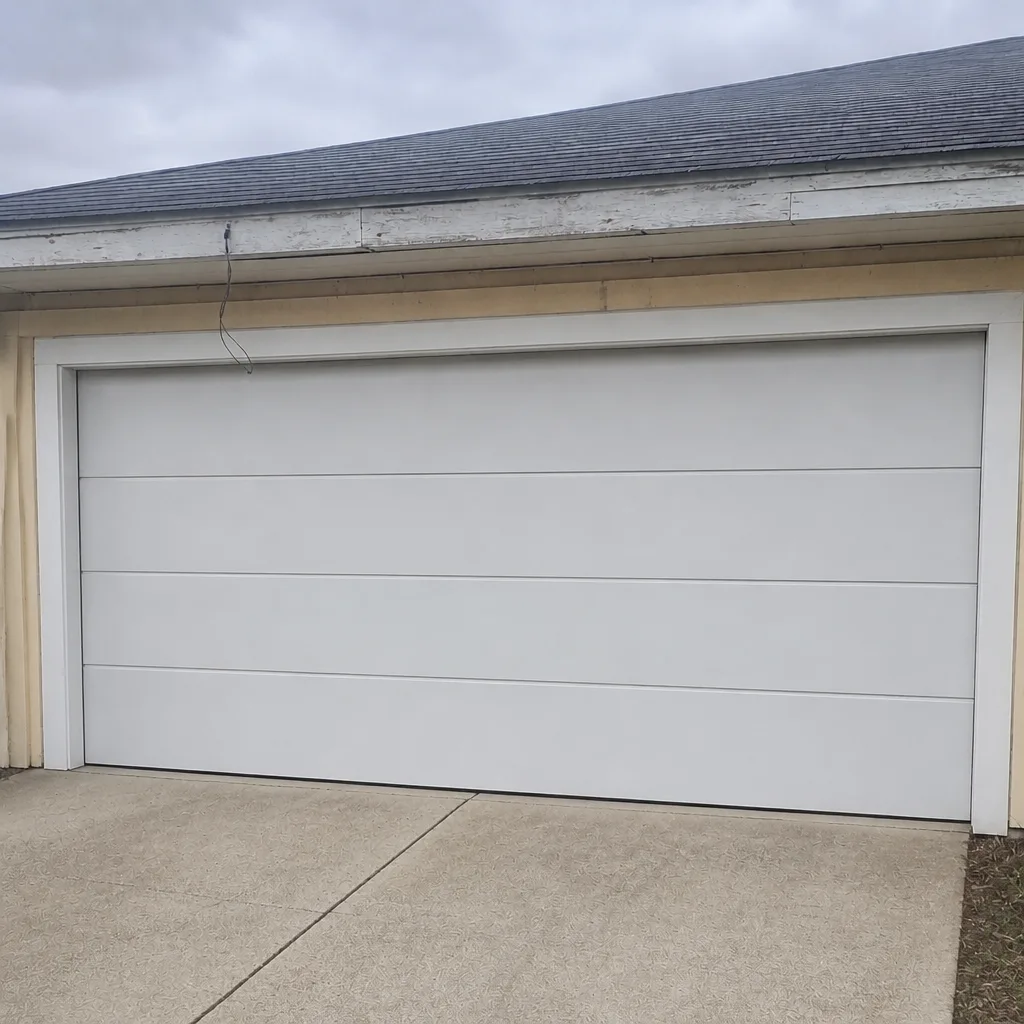 After
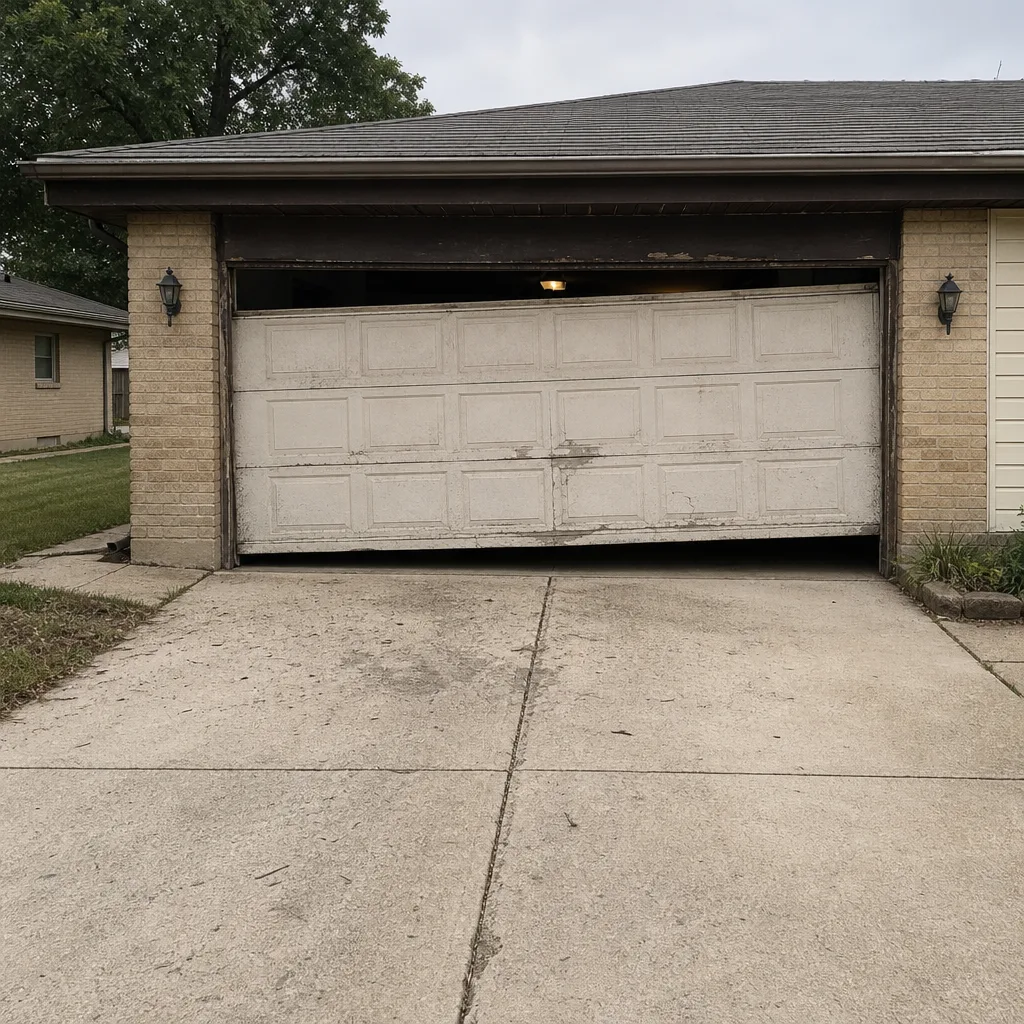 Before
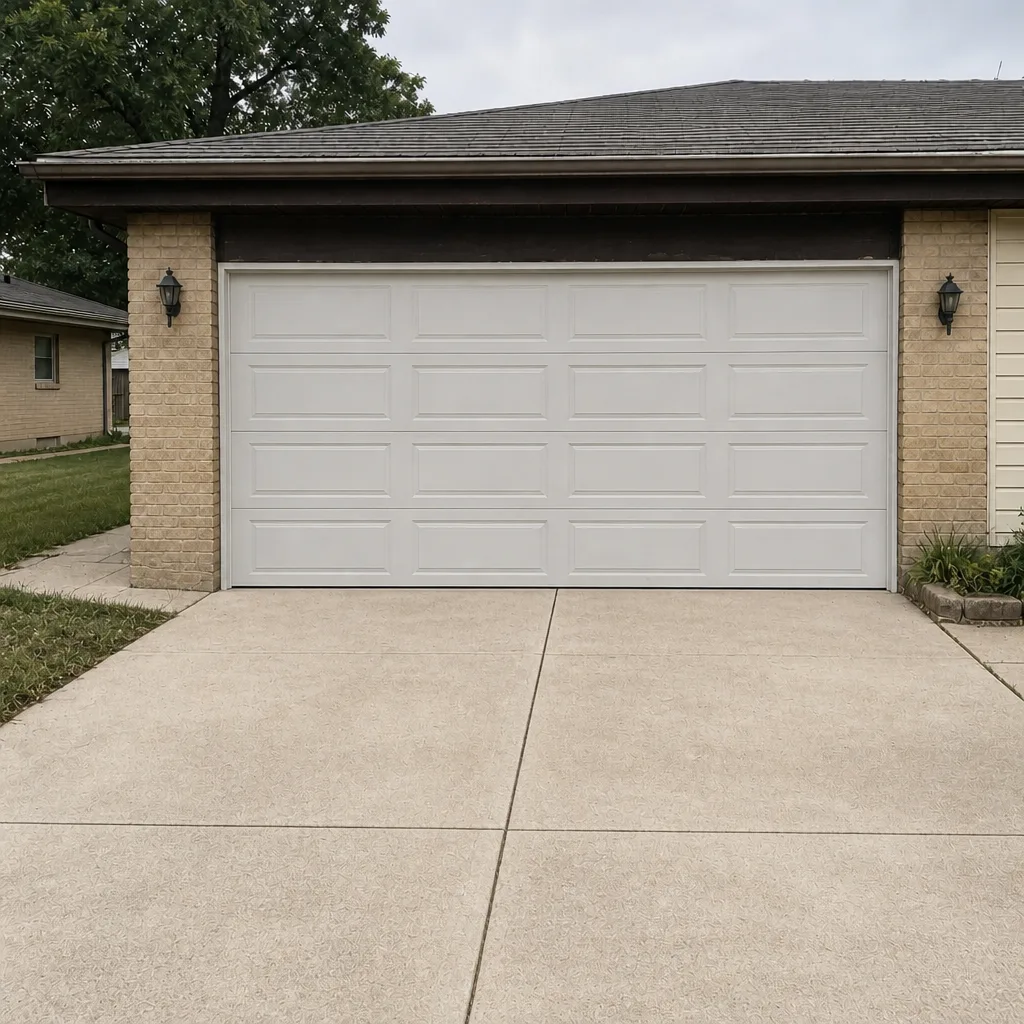 After
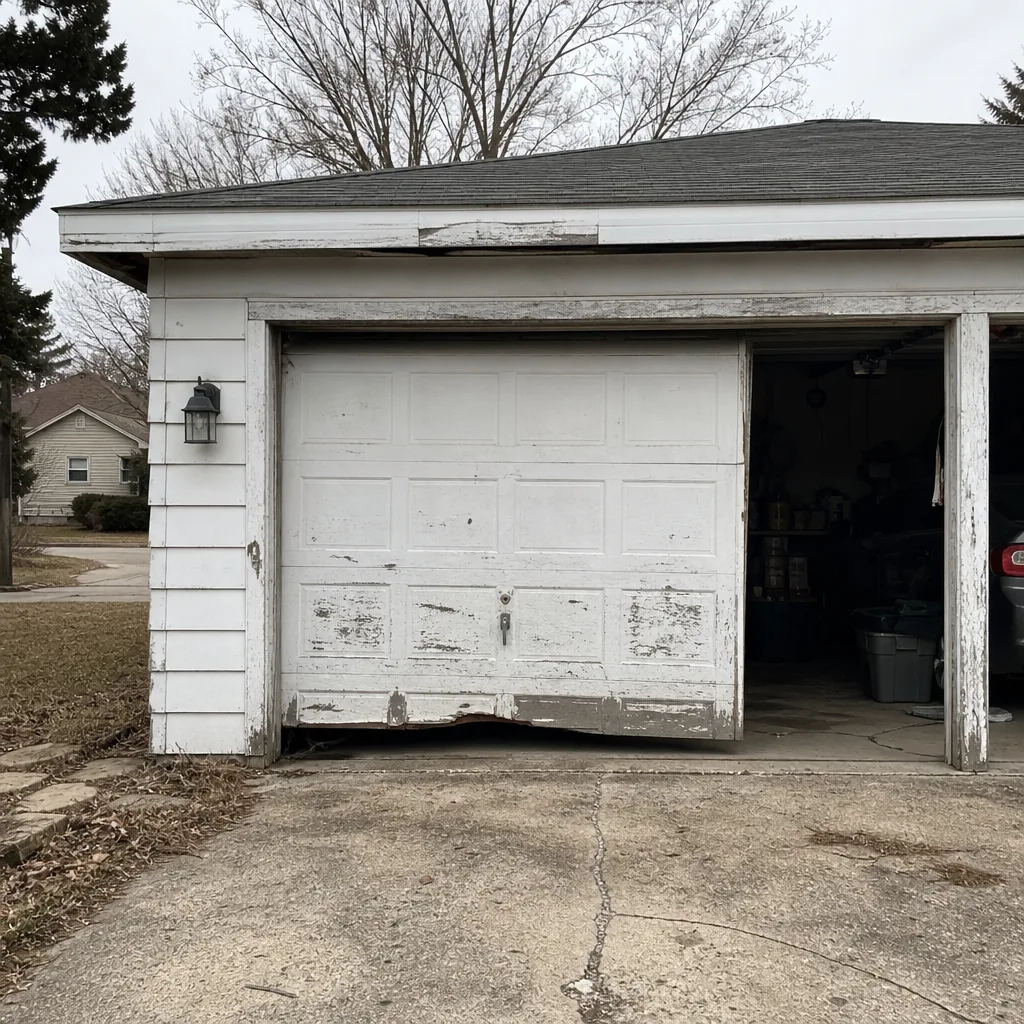 Before
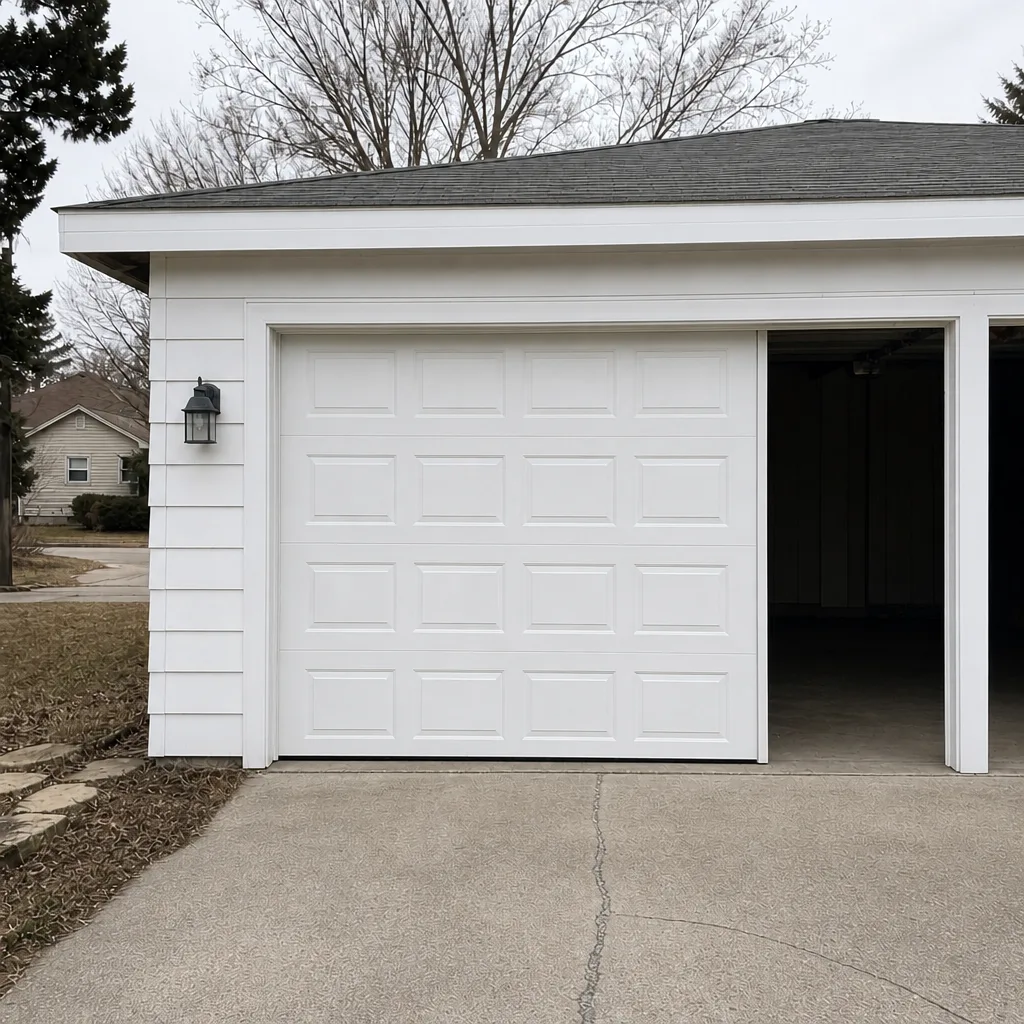 After
When to Call a Professional
Any tier-one sign is a call-now situation: a snapped spring, a frayed cable, a bent track, or a door off its tracks. Don’t try to use the door for a trip to work; schedule a technician and use a different exit. Tier-two signs, such as grinding, uneven travel, or a door that reverses on the floor, are worth a call within the week – waiting risks damage to other parts. Tier-three signs can wait for a routine visit, but a nagging squeal that won’t quiet down after lubrication is a reason to have a technician check the door and opener at the same time. If you’re not sure which tier you’re in, describe what you hear and see to a technician and let them categorize it.
Remington Garage Door Repair offers free estimates in Joliet – call (888) 857-5215. We answer 24/7, and fast dispatch runs from 7am to 7pm, Sunday through Friday. You’ll get a written estimate before any work starts, and the price is set per job – not per hour.
Frequently Asked Questions
Grinding is usually metal-on-metal contact from a dry or worn roller against its track. Popping is usually something under tension – a torsion spring, or a cable slipping in its drum – and it’s more serious than grinding. Both are worth a call, but popping moves faster toward failure.
It’s almost always an opener or safety sensor problem. The two photo-eye sensors near the floor get dusty or slip out of alignment easily, and the opener interprets the interruption as an object in the way. Clean them and see if the behavior stops. If it doesn’t, the opener or the sensors themselves need service.
A heavy-feeling door is a balance issue, usually a worn or broken spring or a cable problem. Balanced doors should stay where you put them. If lifting the door by hand takes real effort, the opener has been doing the lifting for you, and it’s wearing out faster than it should. This one is tier one – stop using the door until a technician checks the springs.
They contribute to it. Cold temperatures make torsion springs more brittle, and the temperature swings between a Joliet winter and spring accelerate wear on the metal. A spring that’s already nearing the end of its life is more likely to break in the coldest weeks. Age and total cycle count still matter, but cold weather is a real factor.
No. A bent track is a tier-one sign, and the reason is simple – the door’s weight and tension systems are involved. Nudging a bent track back into place looks easy but often causes a cable to slip or the door to jump the track entirely. A garage door technician has the right tools and knows how to manage the tension safely. If you’re seeing a bend, call (888) 857-5215 for a free estimate.
Most cities require a permit for structural work on a garage door or its springs, though the exact rules vary. The safest move is to ask your city’s building department before any work is scheduled. For a free estimate on the repair itself, call (888) 857-5215. We answer 24/7. Fast dispatch from 7am to 7pm, Sunday through Friday.
The Bottom Line
Most garage door warning signs are cheap to fix early and expensive to ignore. The single biggest thing this guide changes is how you sort them: Stop Using It Now for anything involving springs, cables, or a crooked door; Schedule Repair This Week for noises, travel issues, or safety-reverse failures; Watch and Maintain for seals, squeaks, and roller wear. In Joliet, the seasonal patterns give you an extra edge – expect more spring and seal issues in winter, more track and opener heat issues in summer. Ten minutes of inspection a month catches most problems before they clear tier three. When you’re not sure, describe what you hear and see to a technician – that’s usually enough to sort the tier before anyone arrives. Our technicians have up to 9 years of experience across the brands that show up in Joliet homes, including Clopay, Amarr, Wayne Dalton, and Craftsman, and we handle the whole door and opener in one call.
Contact
If you’ve spotted a sign in this guide and want a straight answer about urgency, cost, or whether it can wait, call Remington Garage Door Repair at (888) 857-5215 for a free estimate. We answer 24/7, with fast dispatch from 7am to 7pm, Sunday through Friday. You’ll get a written estimate before any work starts, and a clear recommendation on whether to repair or replace – based on the door’s condition, not a commission. We can also help you find the team at Remington Garage Door Repair for repair scheduling, or set up an opener diagnostic in the same visit.
Written by the team at Remington Garage Door Repair.